



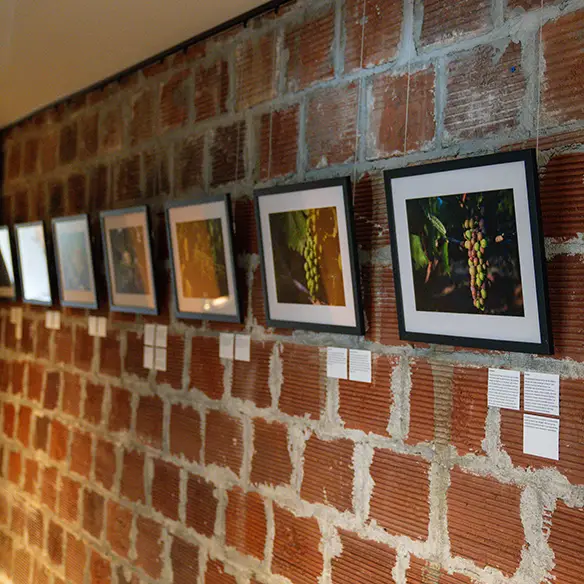
Vine Phase Series
Medium: Giclée print from digital camera
Dimensions: 18″x12″ print in 25 6/16″ x 19 6/16″ frame
Date: 2025
About the Artwork:
Budbreak
As spring weather warms the soil (April in Oregon), carbohydrate stores begin to move up from the deep roots into the vine, where they have been stored over winter. The small nodes on the canes formed during last year’s growing season begin to swell, eventually pushing through new baby leaf growth signaling the start of the growing season.
At this stage, they are extremely delicate and vulnerable to damage from the elements – frost, cold temperatures and hail can all affect the new buds.
Shoot and Leaf Growth
As the weather continues to warm, vine energy is concentrated on developing green foliage that will produce carbohydrates to fuel growth.
Tendrils, leaves and cluster primordia begin to form, opening to catch the increasingly abundant sunlight.
Cluster Inflorescence
Grape cluster primordia form during the rapid growth stage of the early season.
Flowering
The tiny caps that protect the flowers are pushed up and off by the floral organs. The grape cluster is at its most vulnerable during this stage. The same elemental hazards the vine faced during budbreak are even more potentially injurious now. Cool temperatures, wind, hail, rain and frost can cause growth to slow and cause the caps to stick, irreparably damaging the fruit set. This stage can last one to three weeks, depending on the weather.
Grapevines are self-pollinating with the help of wind and tiny insects. With optimal weather conditions, a majority of these flowers will begin to grow as pollinated grapes.
Berry Set
The pollinated grapes have seeds, which will later signal the leaves to send vital sugars into the grape. The grapes that did not pollinate will not receive sugar during veraison, and will remain green and hard into the harvest period.
Lag Phase
For 5 to 7 days, berry growth pauses as seeds finish their development. Once the lag phase completes, berries enter the stage of cell expansion and tannins and acids once again continue to form. At this stage the berries begin to have measureable levels of sugars.
Veraison
Directly after Lag Phase, the berries begin to show color during a period called veraison. Red varieties deepen and begin to turn red, black, gray or blue and the green grapes of white varieties soften and start to show more golden colors. Berries double in size between this stage and harvest and malic acid reduces. Sugars (glucose and fructose) produced by the leaves begin to accumulate in the berries. As berries continue to darken, skins become thinner, while phenolics (flavor compounds) and anthocyanins (color compounds) begin to develop.
Harvest
Now deeply colored and plump with sugar, clusters are ready to be harvested. In Oregon, long, warm summer days turn to cool nights making for ideal, deeply flavored berry development. This slow process allows grapes to develop phenolic ripeness along with the sugars. The more developed the phenolics are, the more flavorful and complex the resulting wine will be.