



Less is More
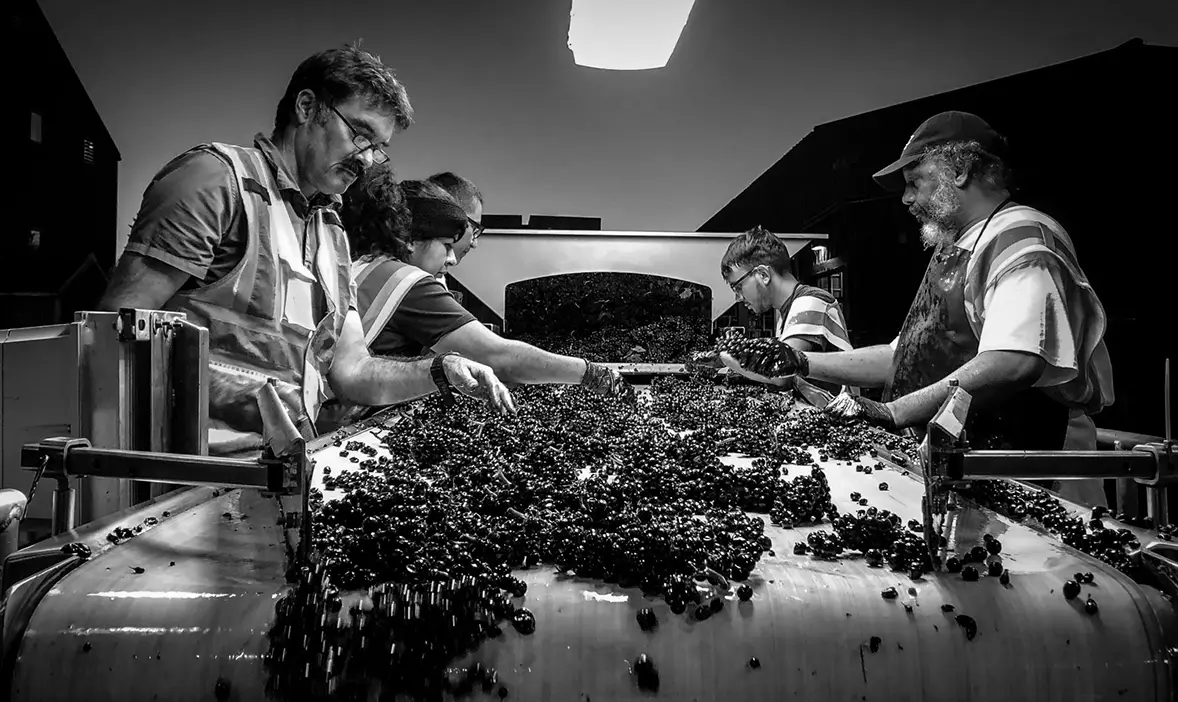
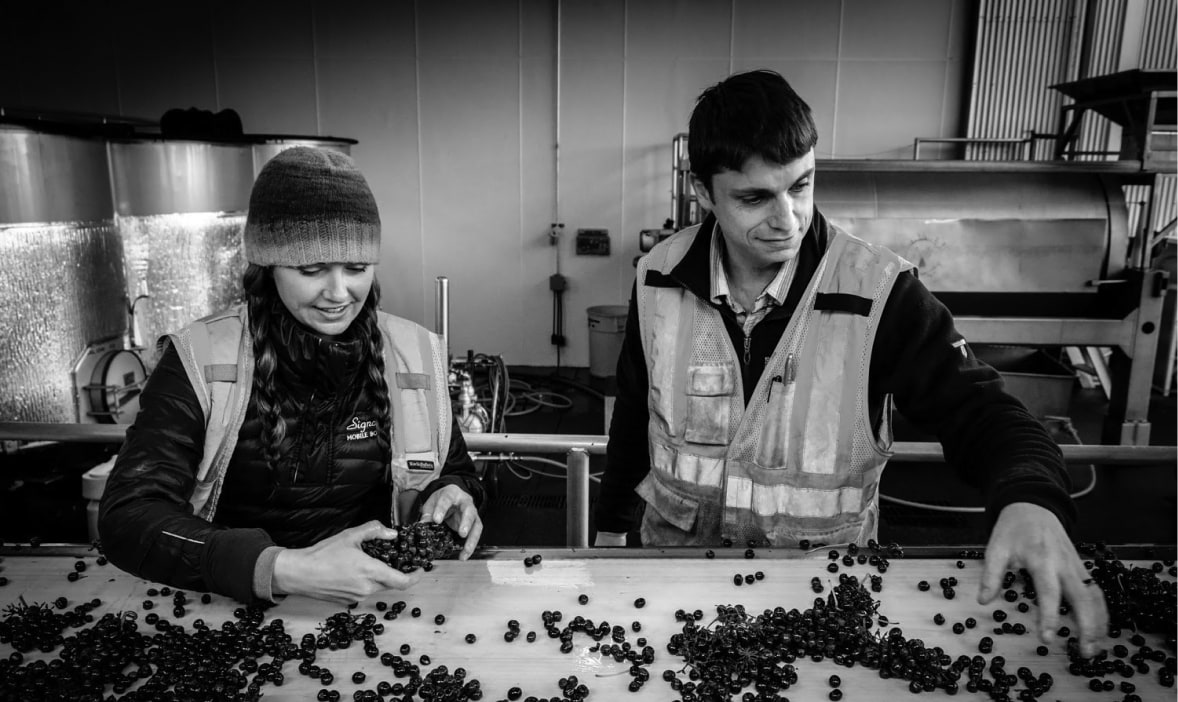
We shepherd the uniqueness of each site from vineyard to bottle with as little adulteration as possible. Clusters for REX Hill are handpicked and promptly delivered to the winery to preserve freshness & fruit integrity. At the winery, the clusters move along the sorting line where they are examined by hand and rejected or passed to the next step. Sorting is critical so that only the best grapes become REX HILL wine.
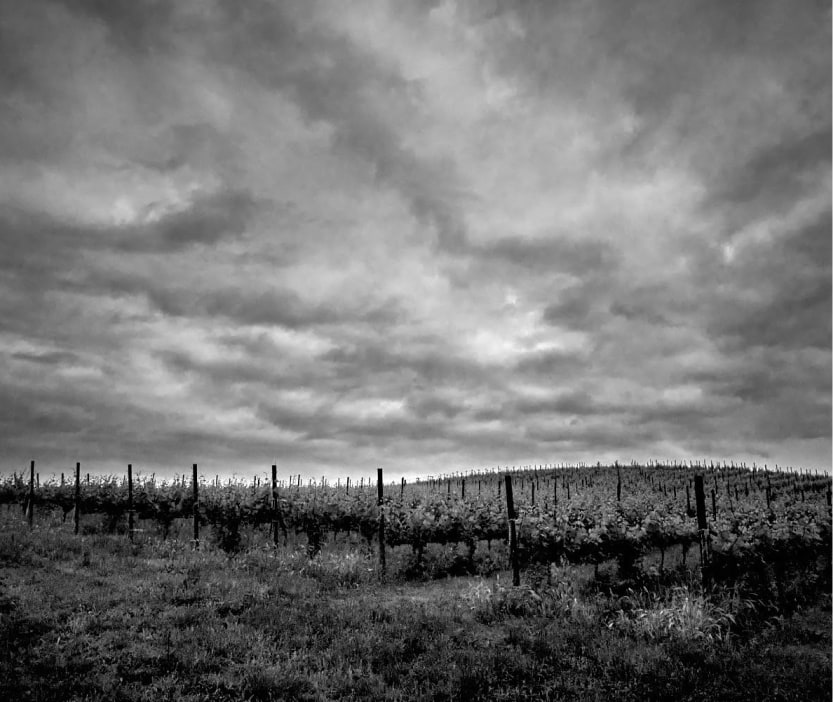
As Certified FDA Organic farmers, we have a strong preference for organic fruit across the REX HILL program. While our wines are not organic certified (we don’t find the prescribed winery practices are always compatible with making the highest quality wines), we do believe that the fruit from organically-managed vines offer more intensity, purity and balance across vintages.
Nestled in the heart of the Willamette Valley, REX HILL has become synonymous with the region’s rich winemaking heritage. REX HILL is for those who seek craftsmanship and authenticity behind every bottle.
Pinot Noir
The next crucial decision is to destem or not. REX HILL uses a generous portion of whole clusters (up to 100% on numerous lots) to give aromatic lift, flavor complexity, and great length to the wines. However, not every clone, block, or vineyard is suitable for whole cluster inclusion, so we assess each lot with care.
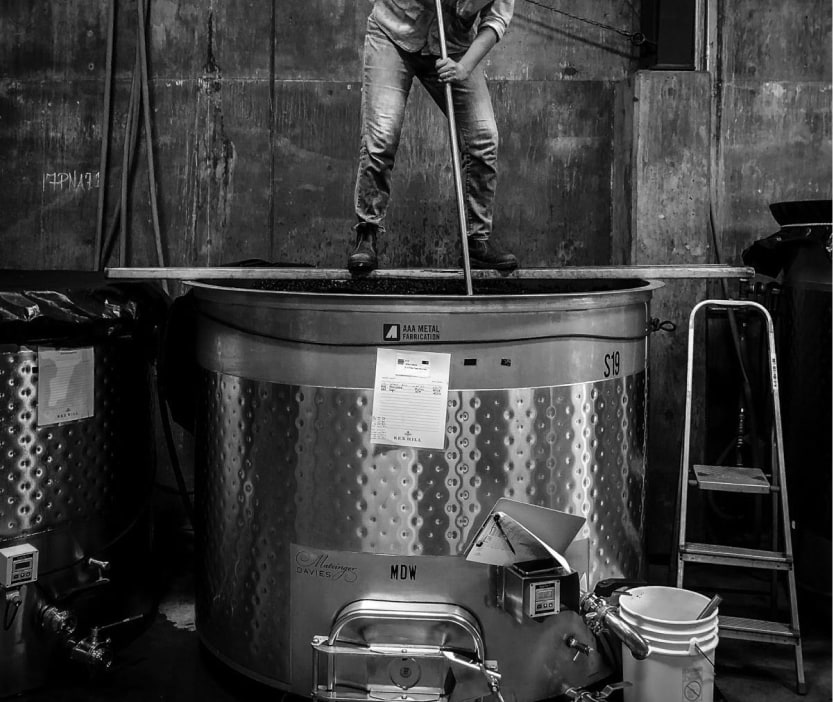
We use gravity to transfer the chosen clusters to small stainless steel & wooden open-top tanks. Using gravity as much as possible is important to prevent quality degradation through the shearing effect of moving grapes through a pump. Once in tank, the grapes undergo a 7 to 10-day cold soak. This process is very important to the REX HILL style as it allows for an aqueous extraction that highlights the vineyard by extracting aromas, color, and flavor without harsh tannins. At the completion of the cold soak, we gently warm the tank and fermentation starts, nurturing the yeast naturally present.
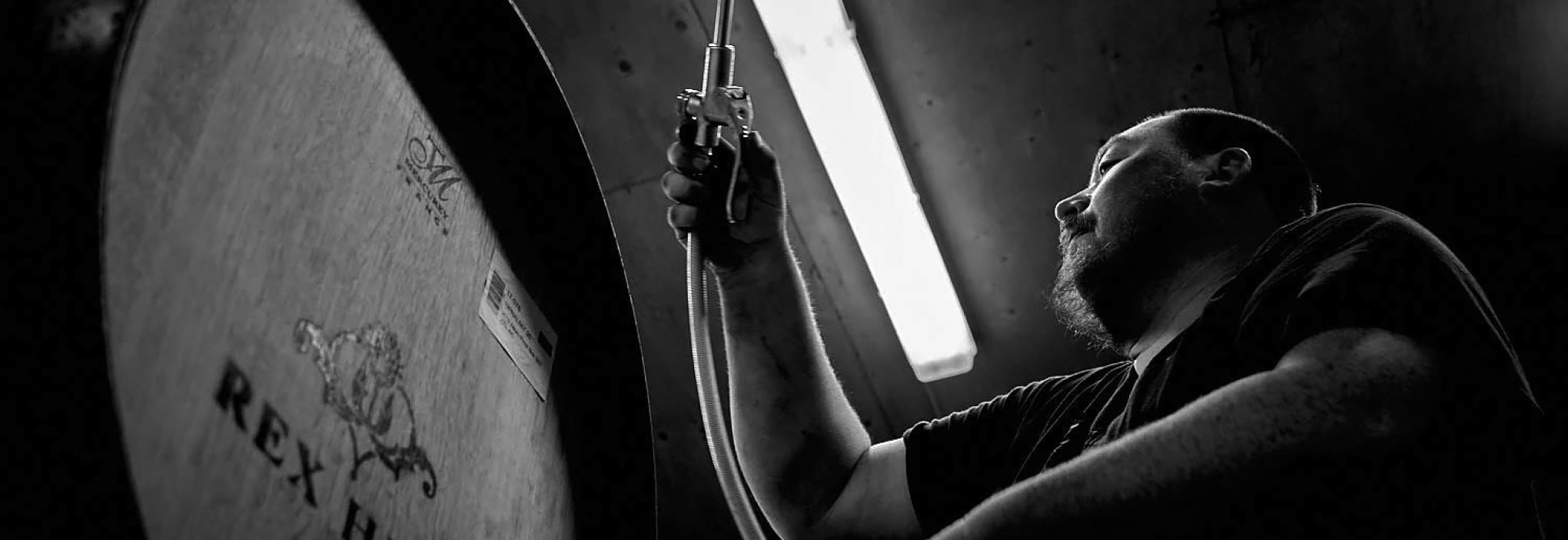
BALANCE, HARMONY, AND TRANSPARENCY
Fermentation and extraction decisions vary according to three guiding principles: balance, harmony, and transparency. This trinity sits at the center to guide all our decisions. In practice, we make extraction decisions (choosing between punch downs and pump overs and their relative frequency, fermentation temperature management, total length of cuvaison, etc.) by using two tools- tasting and experience.
Once the wines are dry (all the sugar has been fermented), and we are satisfied with the relative level of tannins, we press the pomace gently, let the wine settle for 2-3 days and then rack to 228 liter Burgundy-shaped, French oak barrels. The specific choice of cooper and barrel age is highly personal and lot dependent, but we generally use a blend of coopers and on average 35% new oak, with the intention that the oak is in service to the aromas and flavors of the wine, not the other way around. After approximately 12 months in barrel and during which time, the wine gets to marry with the oak and the acidity, alcohol & tannins become fully integrated, we prioritize creating our different blends through tasting.
Chardonnay
We hand-pick the fruit at optimal ripeness with greater attention being paid to natural acidity levels than relative sugar levels. The picking decision varies according to site, clone, vine-age, and season. We strive to make barrel-fermented Chardonnay with freshness and vitality with equal emphasis on aromatics, flavors, texture, and richness. The fruit is transported to the winery and whole cluster pressed to develop the truest expression of site. On occasions, we will crush the fruit and allow for some skin-contact time before pressing.
The juice is settled overnight. Over the following day, we deliberately assess the quality of grape ‘solids’ (or juice lees) at the bottom of the tank and transfer a significant portion of these to the barrels along with the clear juice. These ‘solids’ help build body while also protecting the resulting wine from oxidation during aging.
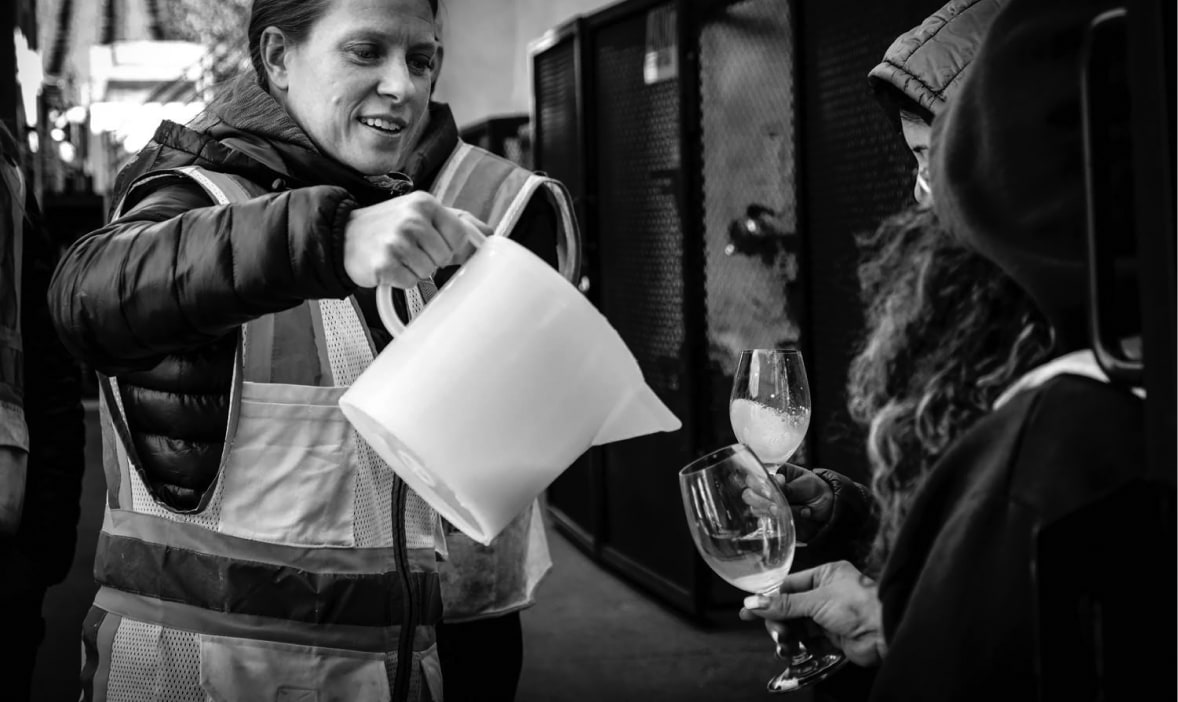
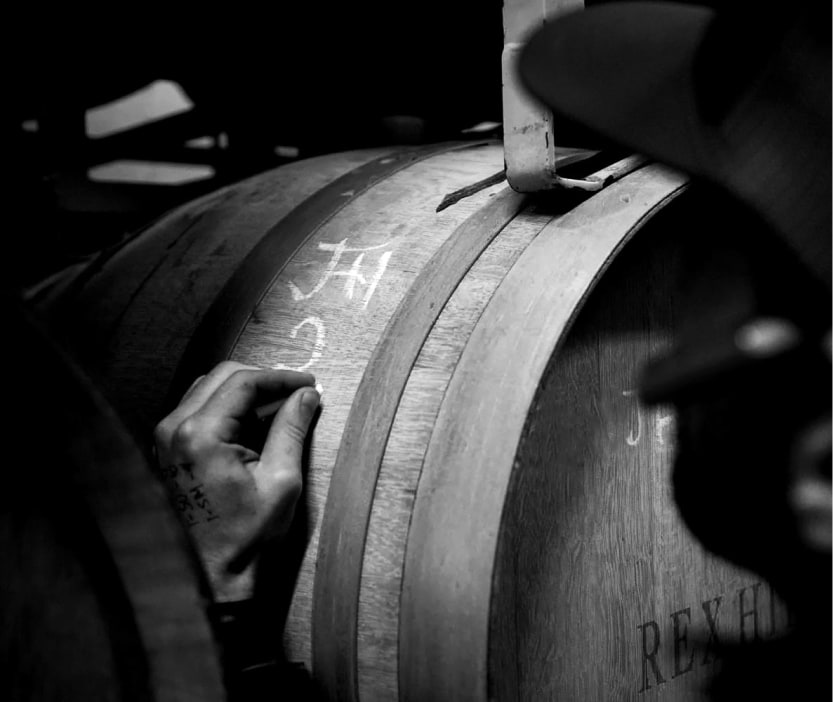
By fermenting the juice in French oak barrels (& a small portion in 2x concrete eggs) and allowing the majority of the wine to go through malolactic fermentation, the wine builds even greater complexity and personality. The result is a wine that is ultimately versatile on the dinner table, with great focus and ageability.
Our Chardonnays typically reflect 25-30% new French oak and are aged on lees in barrel (or concrete egg) for 12 months, before being racked to a stainless steel tank with all the lees for an additional 3-4 months. This extended ageing tempers the most obvious primary fruit characteristics and allow some secondary fruit characteristics, including savory notes to come to the fore, creating length and presence while adding layers on the palate.
As with our approach to REX HILL red-winemaking, we want the site to be most prominent while we also work to honestly reflect the vintage and keep the winemaking process in the background. Our philosophy is very simple – respect the vintage, vineyards and lots to achieve balance, harmony and transparency, knowing that less is more. We have no winemaking ‘recipe.’